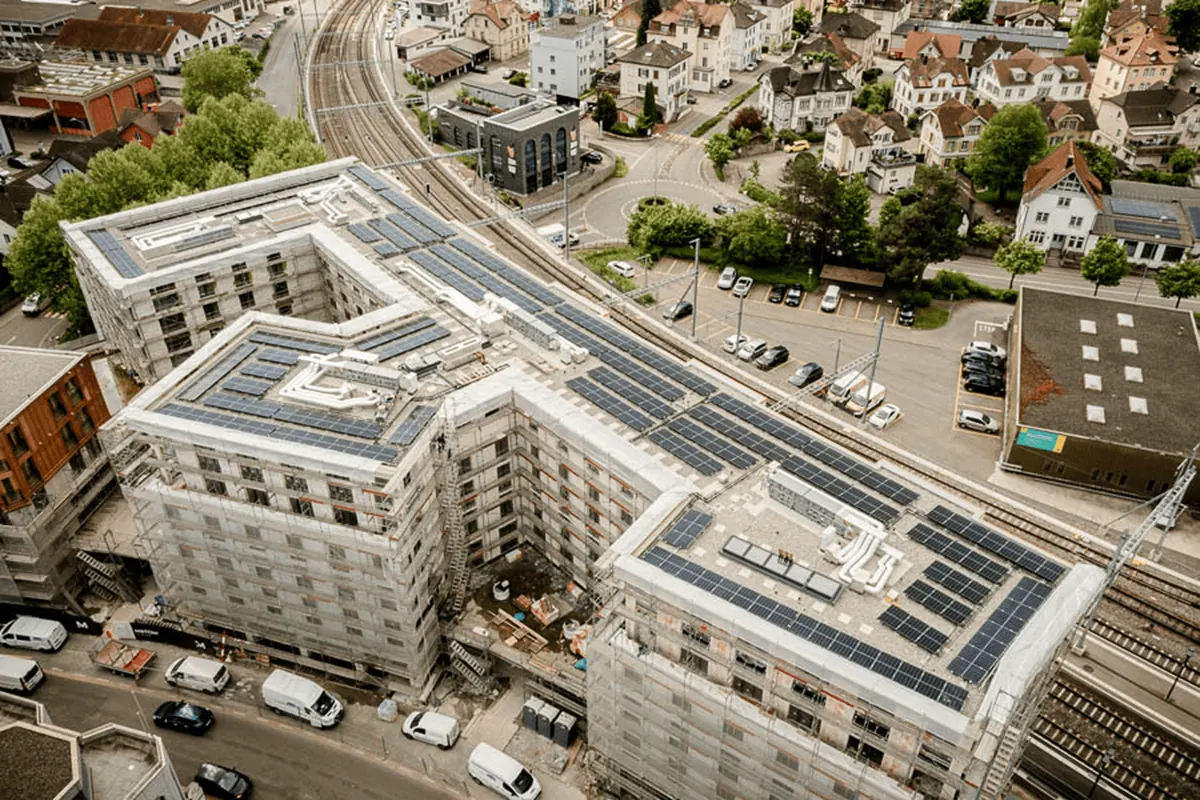
Wil
Untere Bahnhofstrasse
Commercial and residential building, new build with extensive green flat roof
75 %
Regeneration rate
- 386 hybrid collectors
- 164 kWp electrical
- 376 kWp thermal
- 18 boreholes of 250 m
Sustainable borehole heat exchangers through PVT regeneration.
Reference: 17 September 2026 · Bern
The contribution by Timon Wanzenried (B-Solartec AG) is part of the second edition of the white paper “Sector coupling: the key to a successful energy transition in Switzerland”, presented in Bern. It shows how borehole heat exchangers can be used sustainably in the long term with PVT hybrid collectors.
The white paper and the event in Bern bring together different perspectives on how electricity, heat, storage, infrastructure and buildings can interact more intelligently. energie-cluster.ch is among the professional organisations involved.
For B-Solartec, the focus is not on the individual component but on the overall system: hybrid solar, heat pump technology, seasonal storage and the regeneration of borehole heat exchangers work hand in hand.
Sector coupling means no longer treating electricity, heat, storage and buildings as separate systems, but planning and operating them as one energy system.
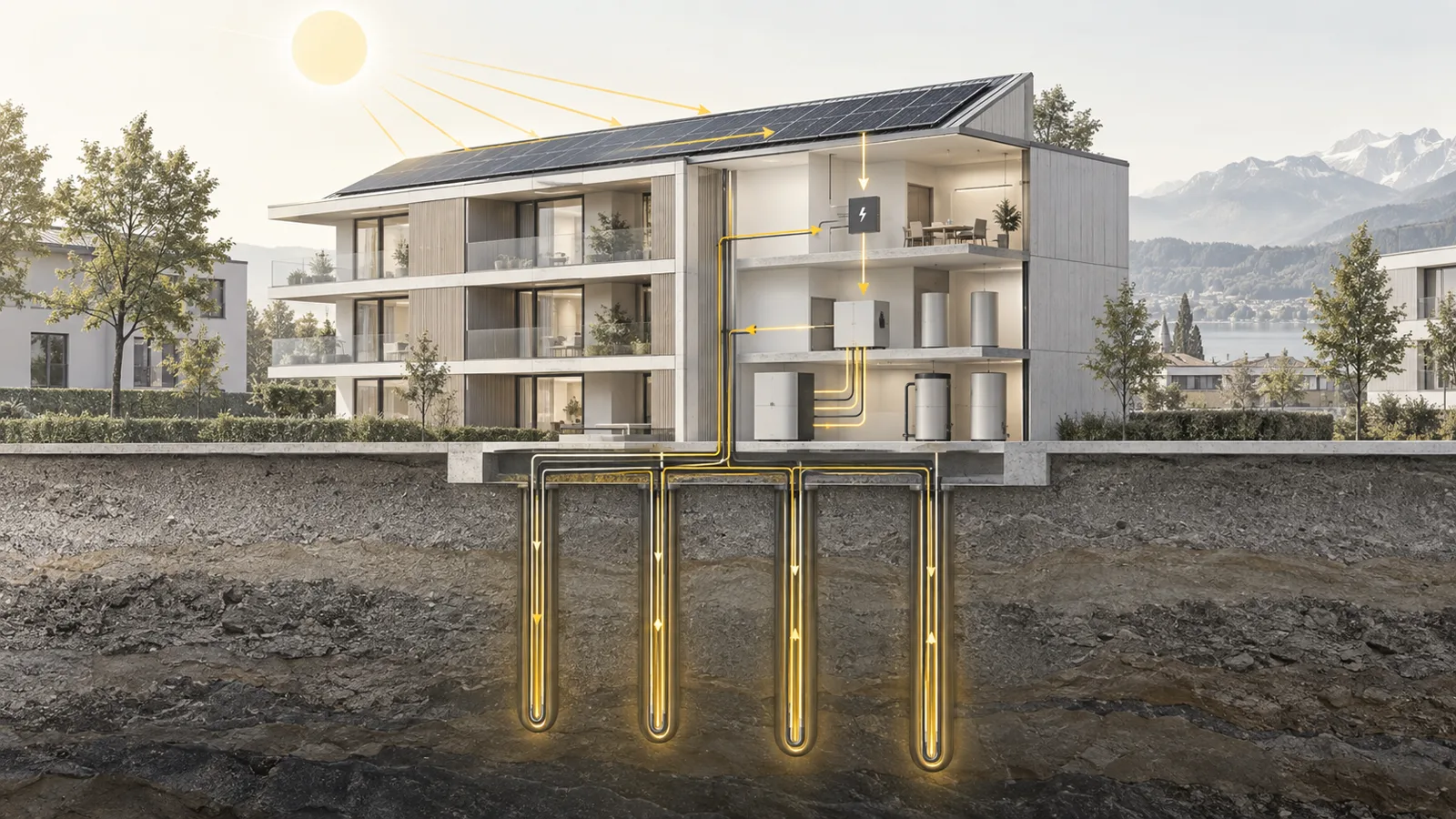
Borehole heat exchangers use the heat stored in the ground for space heating and hot water. Combined with a heat pump, they operate efficiently, need little space and allow passive cooling of the building in summer.
Yet they are not inexhaustible: the heat flowing back from the Earth's interior is more than 250 times smaller than the amount of heat a borehole extracts over the years. The ground cools slowly but continuously. Today, boreholes are designed so that after 50 years of operation the ground temperature does not fall below a minimum of –1.5 °C.
In Switzerland, the number of boreholes has been rising sharply for years. In densely populated areas, more and more systems are being installed in tight spaces – experts speak of density stress, as neighbouring boreholes influence each other and can cool the ground further.
To keep borehole heat exchangers sustainable in the long term, heat must regularly be returned to the ground. This process is called regeneration: the extracted energy is fed back into the ground and the temperature of the heat source is stabilised over the long term.
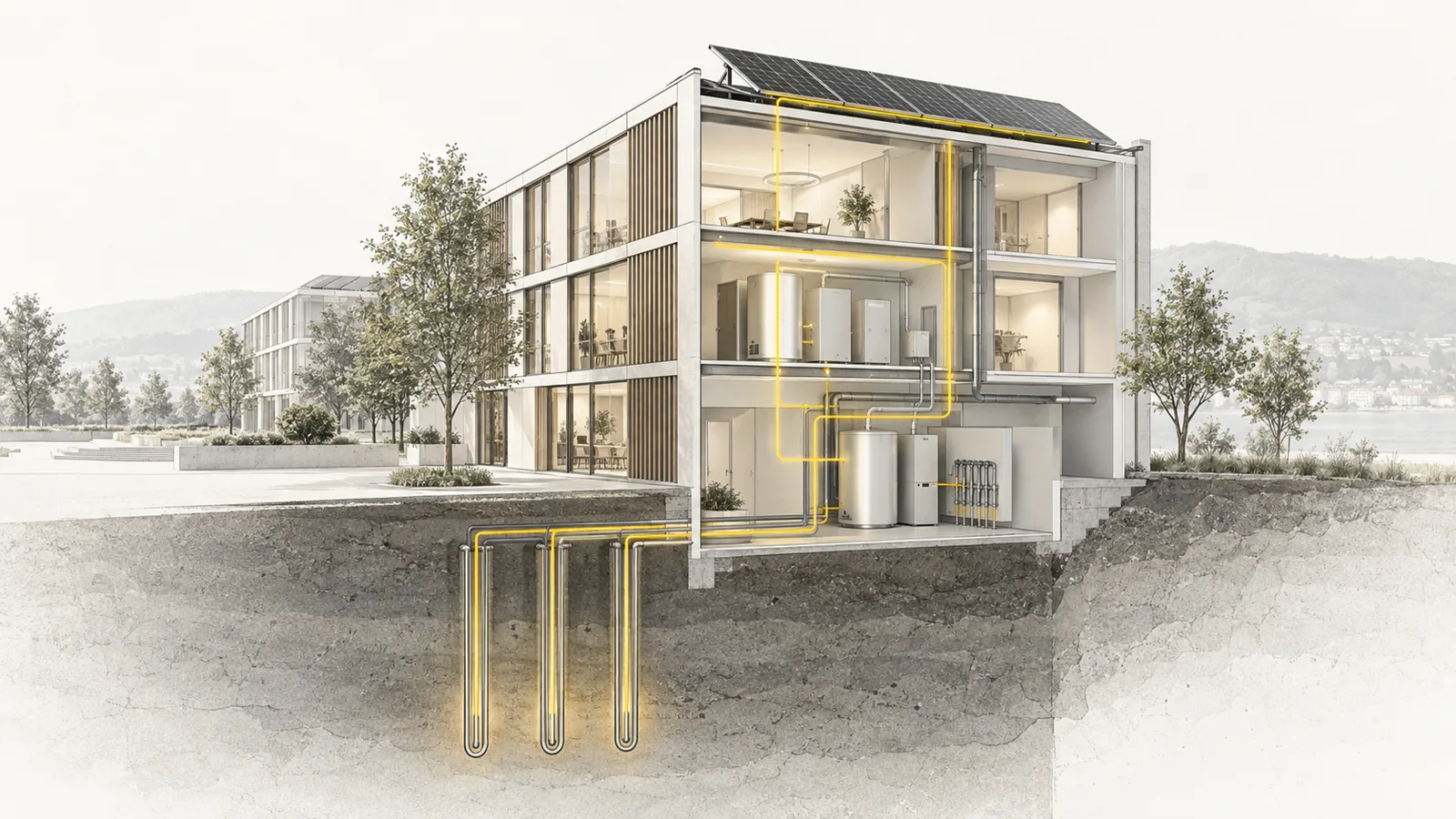
Source: White paper 2026, «Sektorkopplung: Der Schlüssel zu einer erfolgreichen Energiewende in der Schweiz», contribution by Timon Wanzenried / B-Solartec AG, pp. 67–69.
Roof and outdoor areas are a scarce resource. That is why B-Solartec AG relies on hybrid solar collectors (PVT), which generate electricity and heat simultaneously: on the front they work like conventional photovoltaic modules, while an absorber on the back additionally captures heat from solar radiation and the ambient air. Regeneration therefore requires no additional roof or open space.
Conventional photovoltaic modules convert around 20% of incoming solar energy into electricity. Thanks to the additional use of heat, PVT modules achieve an overall efficiency of around 80 to 90% – the total energy yield of a roof can be increased by more than a factor of three compared with a purely photovoltaic system.
Because the heat is produced at a low temperature level, it is particularly well suited to regeneration. Most of it takes place in summer; a specially developed control system also feeds heat into the ground during the other seasons. In heating mode, the cold fluid from the heat pump can first be passed through the PVT modules and preheated, reducing the heat extracted from the ground.
Better heat pump efficiency, lower operating costs.
Regeneration helps maintain the borehole's performance over the long term.
Depending on the project, shorter boreholes or smaller spacing between them.
Heating, cooling, power generation and regeneration in one system.
Wil
Commercial and residential building, new build with extensive green flat roof
75 %
Regeneration rate
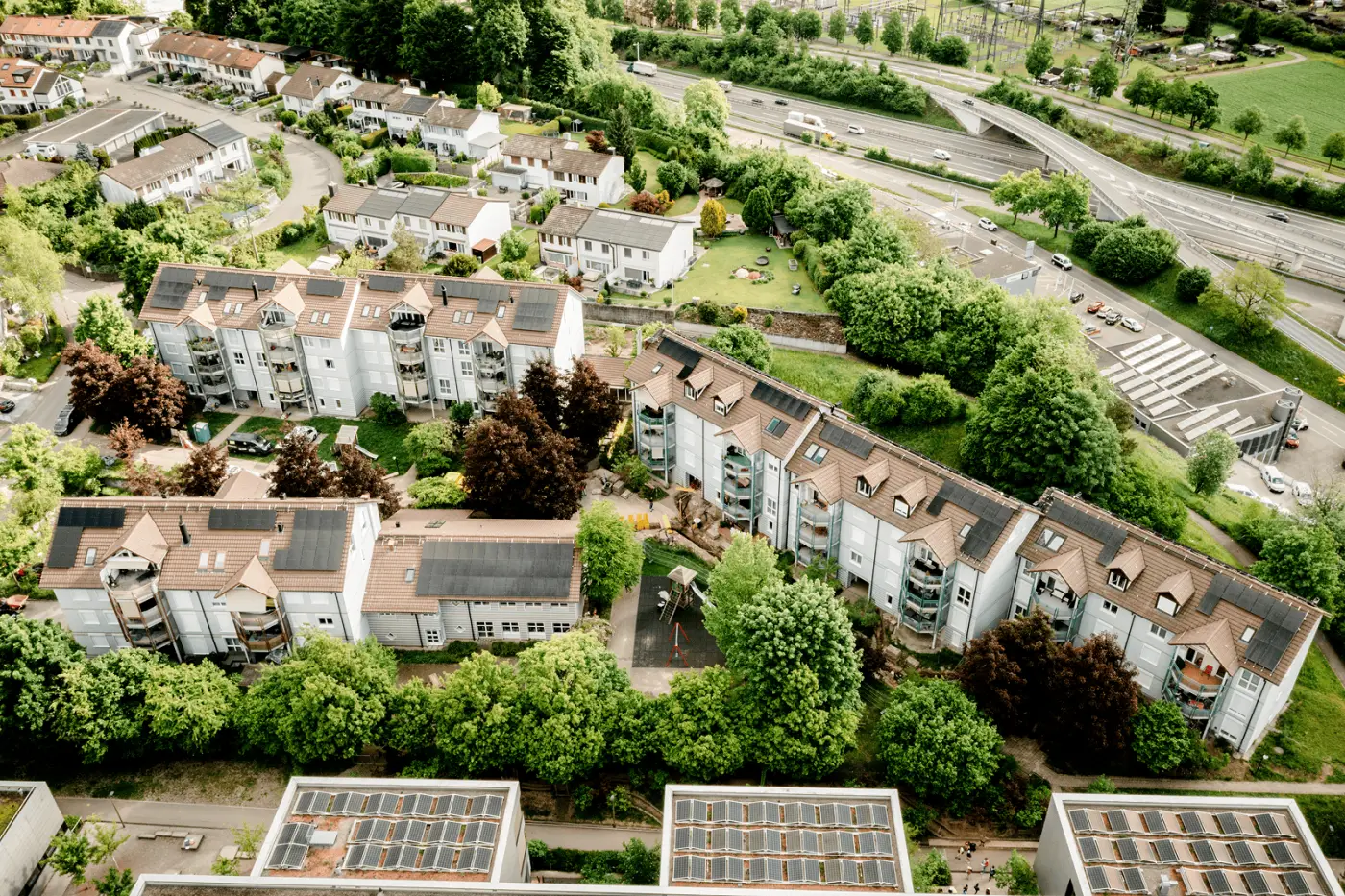
Winterthur
Residential development, existing building with pitched roof
85 %
Regeneration
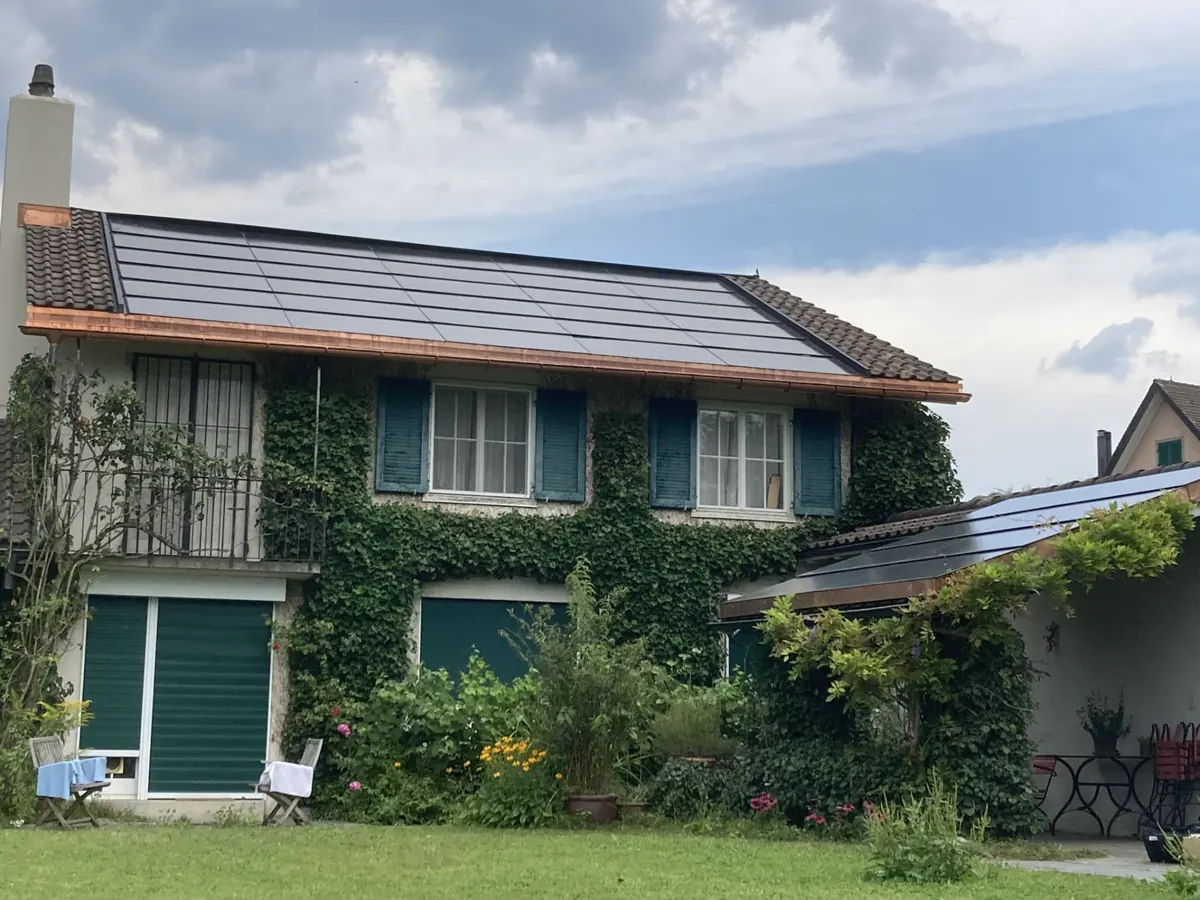
Küsnacht
Residential building, roof-integrated system
–30 %
Borehole length
Whitepaper 2026
B-Solartec AG's contribution on regenerating borehole heat exchangers is part of the 2026 white paper. The publication was produced in collaboration between energie-cluster.ch and oe.energy.
More information on the Sektorkopplung initiative:
 energie-cluster.ch
Find more projects, insights and current developments from B-Solartec on LinkedIn.
Follow B-Solartec on LinkedIn